Groundbreaking dendrochronology study confirms Bensalem’s most significant historical landmark dates to 1742
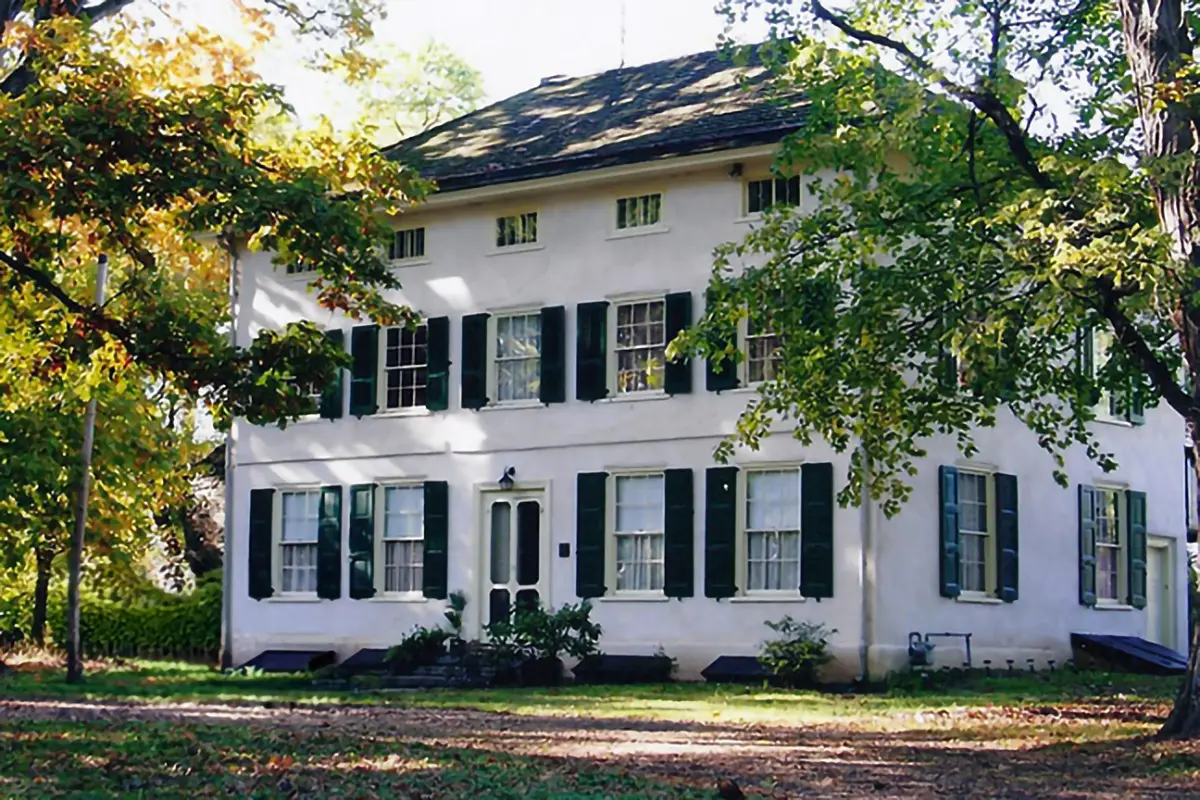
BENSALEM TOWNSHIP, PA — In a major breakthrough for local history, scientists have conclusively dated the construction of Growden Mansion to the winter and spring of 1742 using advanced tree-ring dating techniques. The findings confirm that the historic buildings witnessed the Revolutionary War and were present during the dramatic events involving loyalist Joseph Galloway and his wife, Grace Growden Galloway.

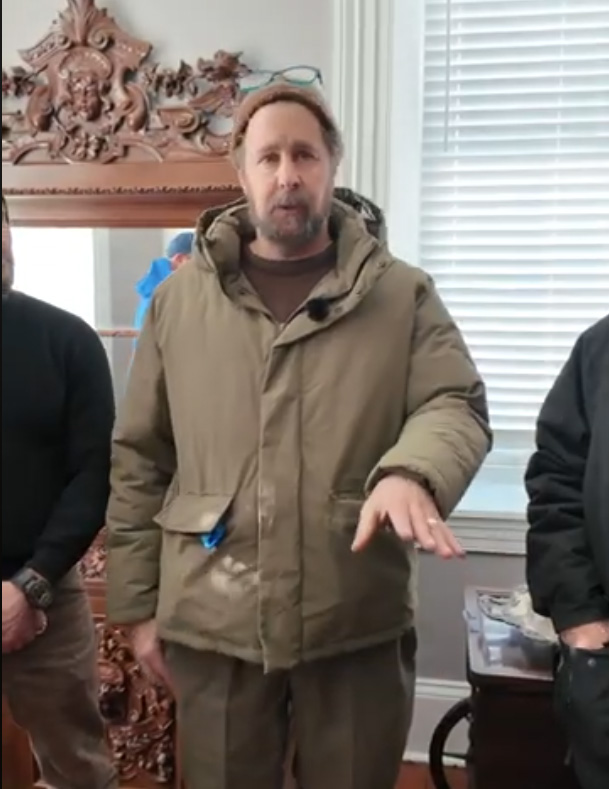
The revelation came during a presentation at the mansion site, where Michael Cuba from the Oxford Dendrochronology Laboratory in England shared results from a months-long scientific study conducted in partnership with Bensalem Township, the Bensalem Historical Society, and Clint Flack from the Mercer Museum.
Precision Dating Through Tree Rings
Dendrochronology, or tree-ring dating, is a scientific method that analyzes growth rings in trees to determine the exact year they were formed. Cuba and his colleague, Dr. Dan Miles, who flew in from Oxford specifically for this project, collected over 30 core samples from three structures on the property: the main mansion, the adjacent kitchen building, and a deteriorated structure behind them.
“We took 13 samples out of 10 timbers” from the main mansion, Cuba explained during theannouncement. “Most of these timbers were from the basement and the attic where they were accessible. Eight of them dated to the winter of 1741-42, and then a couple of the other ones dated to spring of 1742.”
The kitchen building yielded identical results, with most timbers cut down in the winter of 1741-42 and the summer beam dating to a season later. This repetition across multiple
samples from dispersed locations throughout the structures provides conclusive evidence and eliminates the possibility of recycled or replaced timber skewing the results.
“One of the reasons that we take as many samples as we do is to look for repetition to make sure that we’re not in a situation where we’re looking at a recycled timber or a replace timber,” Cuba noted.
Construction Likely Occurred in 1742
Based on the felling dates and the nature of colonial construction practices, the researchers concluded that construction most likely happened during 1742. Cuba explained that “green wood is easier to work” — timber with high moisture content straight from the tree is much easier to cut than seasoned wood.
“When it’s fresh off of the stump, and it’s got a high moisture content, it’s much easier to cut,” Cuba said. “As the wood dries out, you’ll find that cutting tools have a tendency to tear more than slice.”
The pristine condition of the timber surfaces, visible under raking light, indicates the wood was worked while wet, suggesting the trees were cut and used immediately rather than being stockpiled for years before construction.
Rare Colonial Construction Techniques
The study also revealed fascinating details about colonial building methods. Many of the floor joists in the mansion were “pit sawn” — a labor-intensive early technology where workers would saw timber by hand over a pit or on a trestle.
“Usually, sawmills come into settlements pretty quickly, and that you don’t have to do it manually,” Cuba explained. Given that the first American sawmill was established at Plymouth in 1627 and sawmills existed in the Philadelphia area by 1742, the use of pit sawing suggests the timbers were likely felled and processed right on the Growden property.
“More than likely, these timbers were felled on this property, hewn right here, and put up on a trestle, or they may have dug a pit to do the sawing, and that’s saving you on the expense and the labor of transportation,” Cuba said.
Rewriting Local History
The findings have significant implications for understanding Bensalem’s history. Prior to this study, the mansion was believed to date back to the 1680s when Joseph Growden first settled on the land purchased from William Penn.
“Originally, this structure was supposedly believed to have dated to the 1680s when the first Growdens came over,” said Flack. “But we now know that none of these buildings appear to be from that period of time, which means on this vast acreage that the Growdens owned, somewhere else was the original settlement in the 1680s into the 1690s up till 1742.”
This revelation opens new avenues for research to locate the original Growden settlement site from the late 17th century.
Revolutionary War Significance Confirmed
Most importantly, the dating confirms that the current structures were present during the Revolutionary War, when the property played a central role in one of the era’s most dramatic personal and political sagas.
The mansion was the home of Joseph Galloway, a prominent Pennsylvania politician who served as Speaker of the Assembly and delegate to the First Continental Congress. Galloway, a staunch loyalist, proposed a Plan of Union to keep the colonies within the British Empire. When Congress rejected his plan, he eventually fled to British-held New York in 1776 and later to England, taking the couple’s daughter Elizabeth with him.

His wife, Grace Growden Galloway, remained behind to fight for the properties she had inherited from her father, Lawrence Growden. Though women could not legally own property at the time — it automatically became her husband’s upon marriage — Grace waged an extensive legal battle documented in her detailed diary, which has become an important historical source about the experiences of female loyalists during the Revolution.
In 1778, the Pennsylvania Assembly convicted Joseph Galloway of high treason in absentia and confiscated the estates. Grace was forcibly evicted from the mansion in August 1778. She died in 1782, never reuniting with her husband or daughter.
The property once hosted visits from George Washington, Benjamin Franklin, and John Adams. Local legend maintains that Franklin conducted his famous kite-flying experiment at the mansion, though broader historical consensus places the experiment elsewhere.
Connection to England Discovered
In a remarkable coincidence, Sally from the Bensalem Historical Society revealed during the announcement that descendants of Joseph Growden had recently visited from England and subsequently sent historical documents and photographs from Trevose, England — the namesake for the mansion, also known as Trevose Manor.
The materials, which arrived just the night before the dendrochronology results were announced, include a 1702 manuscript lease for houses in England signed by Lawrence Growden, photographs of the family’s ancestral home in Trevose Barton, and other documents that trace the Growden family’s English origins.
“Here’s the guy from coming from England to build this,” Sally noted, showing the documents to those gathered.
Third Structure Remains Partially Dated
The ruined structure behind the mansion proved more challenging to date precisely. Due to deteriorated condition and the absence of bark edge on any samples — which is essential for obtaining an exact felling date — researchers could only establish that the last ring counted was 1718.
“We didn’t find bark edge anywhere, which is essential to getting an actual felling date,” Cuba said. However, the samples appear consistent with the other two structures, suggesting it was likely built at the same time. Cuba plans to return when conditions improve to take additional samples from four more timbers to potentially extend the dating sequence.
Growden Mansion Today
The property is now operated as a museum by the Historical Society of Bensalem Township and is listed on the National Register of Historic Places. The mansion includes “The Vault,” an outbuilding where early Bucks County deeds and records were once stored, and which still bears bullet holes from the Revolutionary War.
The township has recently completed renovations and is currently seeking donations of antique or antique-looking furniture to furnish the newly renovated rooms.
For Bensalem residents and history enthusiasts, the dendrochronology study represents a watershed moment in understanding one of the township’s most important landmarks. As Flack emphasized, “This confirms this is the structure that’s here during the Revolutionary War, which is really the most important history of this.”
The Growden Mansion stands at 5408 Neshaminy Valley Road along the Neshaminy Creek. For information about visiting or donating furniture to the mansion, contact the Bensalem Township Parks and Recreation Department at parks@bensalempa.gov.
Editor’s Note: Dendrochronology has proven invaluable in dating historical structures throughout the world. The technique matches patterns of wide and narrow tree rings — which reflect annual growing conditions — between samples to establish precise chronologies. The Oxford Dendrochronology Laboratory has developed master chronologies for oak and pine extending back thousands of years, allowing researchers to date wood samples by comparing ring patterns to these established sequences.