


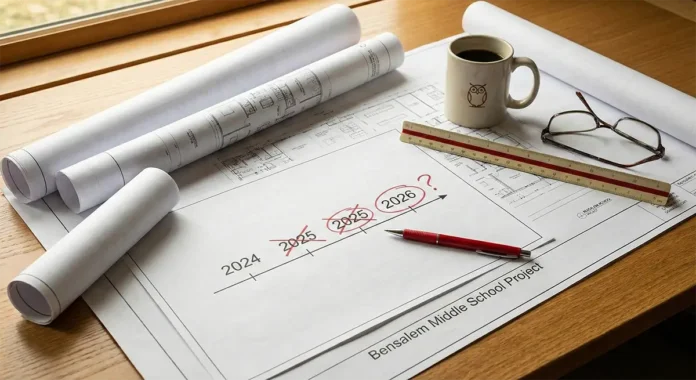
If you feel like we’ve been talking about “The Middle School Project” for years, you’re not wrong.
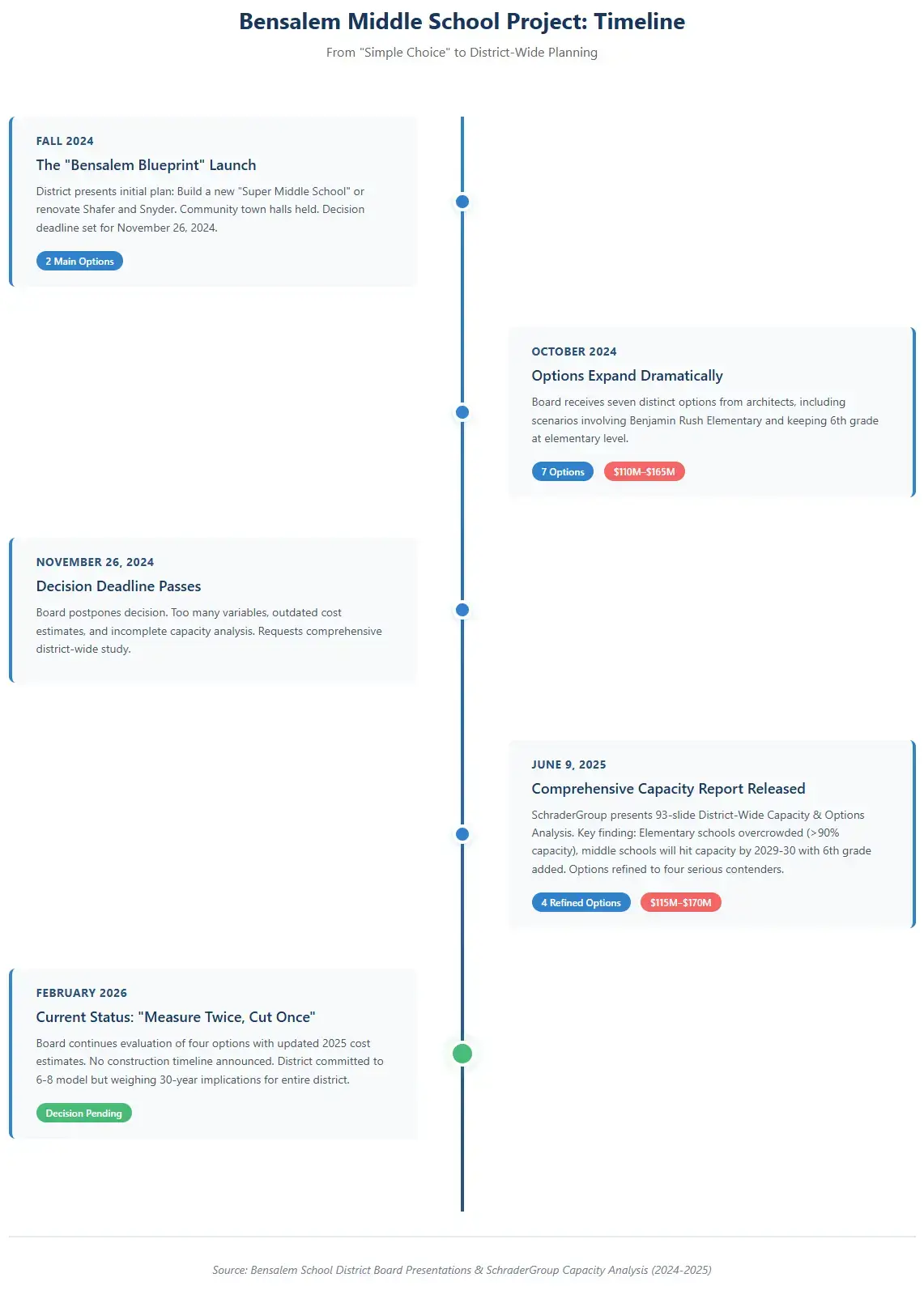
Back in the fall of 2024, the timeline seemed clear. The School District had presented a “Bensalem Blueprint,” held community town halls, and circled November 26, 2024, on the calendar as the date for a final decision. The choice back then felt binary: Build a brand-new “Super Middle School” or renovate the aging Shafer and Snyder buildings.
But that deadline came and went. Now, as we move through 2026, the project has evolved from a simple construction choice into a complex district-wide puzzle.
If you’ve lost track of the details, you aren’t alone. Here’s the definitive update on what has changed, the new options on the table, and why the decision is taking longer than expected.
The One Thing That Hasn’t Changed: The “6-8” Model
Before we get into the buildings, it’s important to remember the goal. Regardless of which construction plan is picked, the District remains committed to one educational shift: Moving 6th Grade to Middle School.
Educational research (and the District’s own presentations) argues that 6th graders benefit from the specialized labs, wider course selections, and “team” structures available in a middle school setting. This realignment also relieves overcrowding in the elementary schools.
The Twist: It’s Not Just “New vs. Renovation” Anymore
In late 2024, the conversation was dominated by “Option A” (New Construction, ~$140M+) vs. “Option C” (Renovation).
However, as the Board and the architects at SchraderGroup dug into the data in 2025, they realized that simply fixing the two existing middle schools might not solve the district’s long-term capacity issues.
New options emerged in board presentations throughout 2025 that expanded the scope significantly. The Board is no longer just looking at Shafer and Snyder; they’re looking at the entire map.
The “New” Options Evaluated in the Past Year Include:
October 2024: Seven Options on the Table
When the Board first began serious deliberations, they were presented with seven distinct paths:
- Option #1: New Construction (Combined facility) – $140–$150M, 4–4.5 years
- Option #2: Shafer – Addition & Alterations – $140–$150M, 4.5 years
- Option #3: Shafer – Addition & Renovations – $130–$140M, 4.5 years
- Option #4: Shafer & Snyder – Addition & Alterations – $155–$165M, 4.5–7.5 years
- Option #5: Shafer & Snyder – Addition & Renovations – $115–$125M, 4.5–7.5 years
- Option #6: Shafer, Snyder, Rush – Renovations Only – $110–$120M, 7+ years (6th grade stays elementary)
- Option #7: New Construction (Campus Model) – cost TBD
The range was dizzying, and the Board asked for more clarity.
June 2025: Four Refined Options
By June 2025, the architects had narrowed the field to four serious contenders, each with updated cost estimates reflecting 2025 construction inflation:
- Option A: Shafer Site – New construction with 3 middle school wings sharing a common core – $145–$155M
- Option C1: Shafer & Snyder – Alterations & Additions at both buildings – $165–$170M
- Option C2: Shafer & Snyder – Renovations & Additions at both buildings – $115–$125M
- Option E: Shafer Site – New campus-style building sharing a common core – $155–$165M
Notice what disappeared: Any option involving Benjamin Rush Elementary or keeping 6th grade at elementary schools was off the table. The district is moving forward with the 6-8 model.
Why Did This Take So Long? The June 2025 Capacity Study
The delay wasn’t indecision—it was due diligence.
In June 2025, the Board received a comprehensive District-Wide Capacity & Options Analysis from SchraderGroup. This massive study didn’t just count desks—it looked at enrollment projections for the next decade, analyzed every classroom’s functional capacity, and evaluated whether the district’s building stock could handle the shift.
Key Findings:
- Elementary Schools: Currently operating above the recommended 90% capacity. Even with projected enrollment declines (from 2,759 students in grades K-5 to 2,630 by 2029-30), the six elementary buildings will remain overcrowded.
- Middle Schools: Currently operating below capacity, but projected to hit capacity by 2029-30 once 6th grade is added. Snyder is more crowded than Shafer.
- High School: Operating well below the recommended 80% capacity and projected to remain that way.
The Challenge:
The district wants to avoid building a new school that’s too small in 5 years or renovating an old one that’s too big. The enrollment projections show:
- Grades 6-8 will grow from 1,529 students (current) to a peak of 1,567 in 2025-26, then stabilize around 1,495 by 2029-30.
- Grades K-5 will decline from 2,759 to 2,630 over the same period.
This means the district needs middle school capacity for approximately 1,550–1,600 students to accommodate fluctuations and maintain healthy utilization rates.
The Financials:
Interest rates and construction costs have continued to rise since the original 2022 estimates. The Board is currently weighing updated budget estimates for the four most viable paths to ensure tax stability while delivering a 30-year solution.
What’s Next?
As of February 2026, we’re in the “measure twice, cut once” phase.
While there’s no “shovel in the ground” yet, the pause suggests the Board is moving away from a quick fix and toward a comprehensive solution that might reshape not just the middle schools, but how our elementary schools feed into them.
We’re monitoring the Business Affairs Committee agendas closely. As soon as the final “Recommended Option” is brought to a vote, Bensalem Weekly will have the full breakdown of the costs, the timeline, and what it means for your student.
📂 Dig Deeper
- The Original Plan: View the 2024 Bensalem Blueprint
- The Analysis: View the June 2025 Capacity Report
- Full Project Page: Bensalem School District Middle School Project
- Feedback: The district is still accepting questions at middleschoolproject@bensalemsd.org